
English
English
Views: 0 Author: Site Editor Publish Time: 2026-06-18 Origin: Site


Table of Contents
Modern warehouses rely on a wide range of loading dock equipment to ensure safe, efficient, and continuous material flow. These systems bridge the gap between trucks and warehouse floors, protect goods from environmental exposure, and improve operational productivity.
This guide introduces the main types of loading dock equipment, explains how they work together, and helps warehouse managers understand how to select the right solutions based on operational needs, safety requirements, and facility conditions.
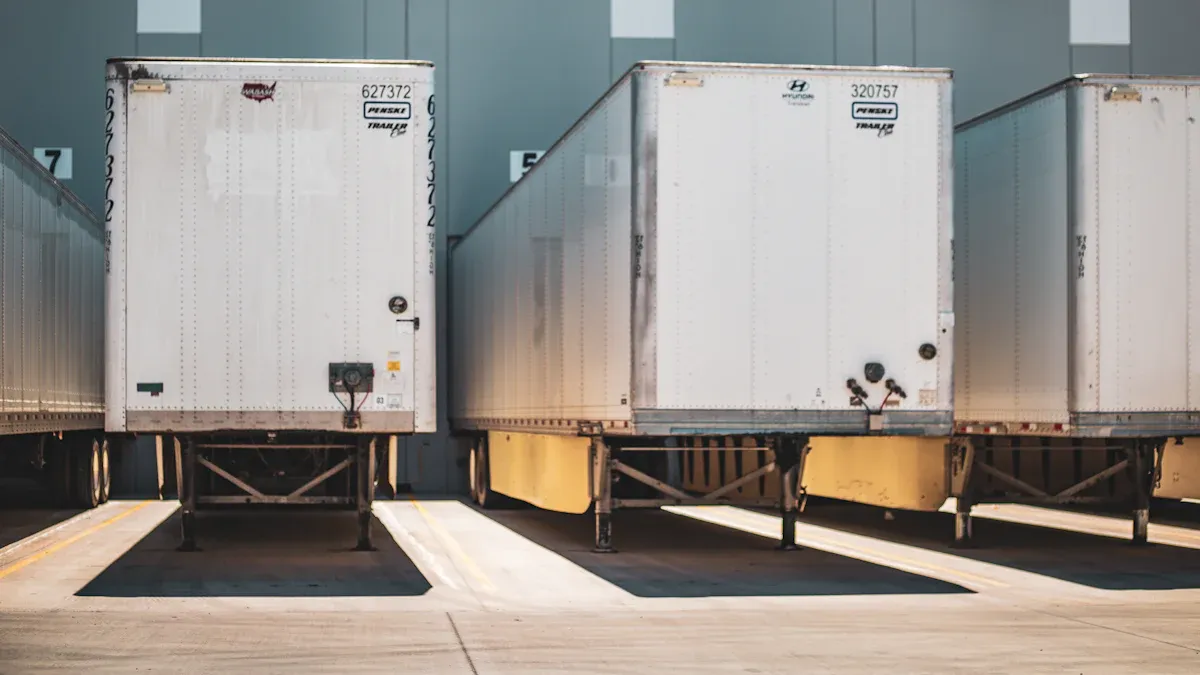
Loading dock equipment refers to a group of mechanical and structural systems designed to facilitate safe and efficient transfer of goods between trucks and warehouse facilities.
A complete loading dock system improves:
Safety during loading and unloading
Efficiency of material handling
Protection of goods and workers
Environmental control within facilities
Modern logistics operations involve high-frequency loading, diverse vehicle types, and strict safety requirements. A complete loading dock system helps reduce downtime, improve safety, and maintain stable workflow under varying operational conditions.
A typical loading dock system includes dock levelers, shelters, vehicle restraints, industrial doors, bumpers, and supporting accessories that work together as an integrated loading solution.
A modern loading dock operates as a coordinated system rather than independent equipment units.
Typical workflow:
Truck arrives → Vehicle restraint secures trailer → Dock shelter seals environment → Dock leveler bridges height gap → Industrial door controls access → Forklift completes loading
This integrated system ensures safe and efficient operations while minimizing delays, accidents, and energy loss.
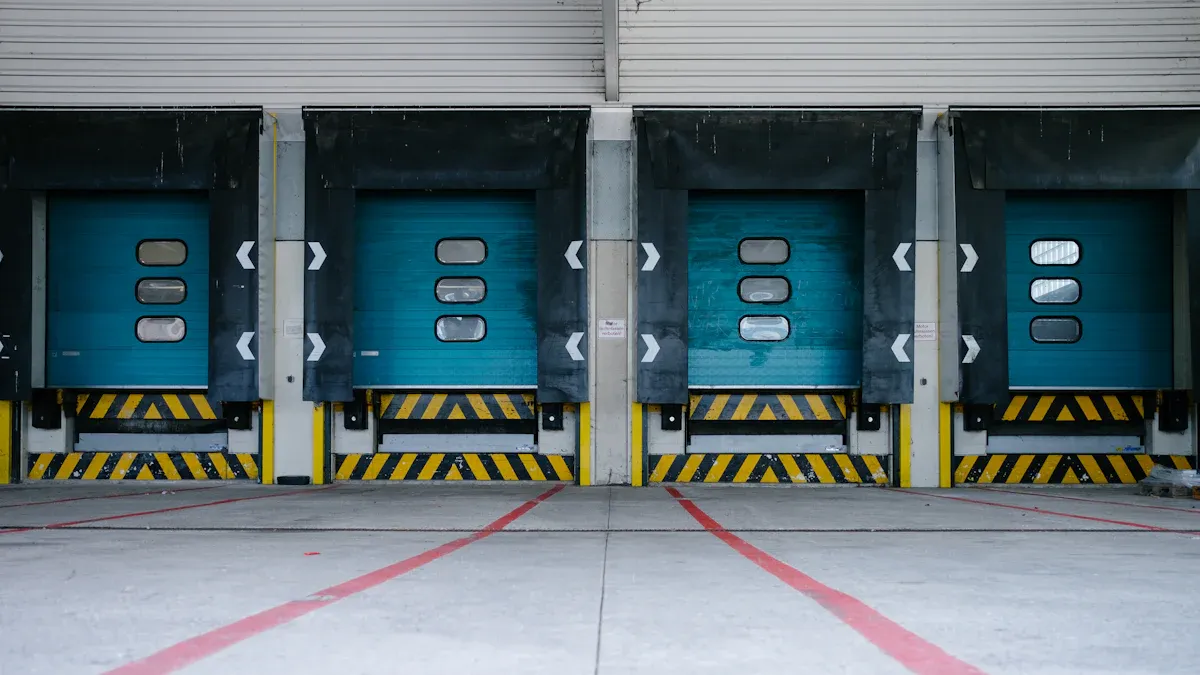
Dock levelers bridge the height difference between the warehouse floor and truck beds, enabling safe forklift movement during loading and unloading.
They are essential in high-frequency logistics operations where trailer heights vary.
Common types:
Hydraulic dock levelers
Mechanical dock levelers
Vertical dock levelers
Telescopic dock levelers
Dock shelters and seals create a protective barrier between the warehouse and the truck, preventing air leakage and environmental contamination.
They are widely used in temperature-controlled and high-cleanliness environments.
Common types:
Inflatable dock shelters
Curtain dock shelters
Foam dock seals
Vehicle restraint systems secure trailers during loading and unloading operations to prevent accidental movement and improve workplace safety.
They reduce risks such as trailer separation and cargo damage.
Common types:
Manual restraints
Automatic restraints
Industrial doors regulate access between warehouse interiors and loading docks, improving safety, energy efficiency, and workflow control.
Common types:
High-speed doors
Sectional overhead doors
Cold storage insulated doors
Dock bumpers absorb impact forces when trucks dock, protecting building structures and vehicles from damage.
They are essential for extending the lifespan of loading dock infrastructure.
Dock accessories enhance visibility, safety, and operational efficiency at the loading dock.
Typical accessories include:
Dock lights
Dock plates
Dock fans
Communication systems
Different warehouse environments require different loading dock configurations. Selecting the right combination of equipment helps improve efficiency, safety, and long-term operational stability.
Below are typical facility types and their recommended loading dock solutions.

Warehouses usually handle standardized truck traffic and require stable, all-around loading dock systems for daily operations.
Recommended equipment:
Dock Leveler (hydraulic or mechanical)
Dock Shelter or Dock Seal
Sectional or High-Speed Door
Key benefit:
Ensures smooth daily loading operations while protecting goods from weather exposure and reducing forklift risk.
Distribution centers operate with high loading frequency and multiple trailer types, requiring fast and efficient dock operations.
Recommended equipment:
Hydraulic Dock Leveler
Vehicle Restraint System
High-Speed Industrial Door
Key benefit:
Improves loading/unloading speed, enhances safety control, and reduces truck turnaround time.
Cold storage environments require strict temperature control, where even small air leakage can significantly increase energy costs.
Recommended equipment:
Vertical Dock Leveler
Inflatable Dock Shelter
Insulated Cold Storage Door
Key benefit:
Maintains stable internal temperature, reduces energy loss, and protects temperature-sensitive goods from contamination.
Manufacturing environments require durable and impact-resistant equipment to support heavy-duty and continuous operations.
Recommended equipment:
Heavy-Duty Dock Leveler
Dock Seal
Sectional Industrial Door
Key benefit:
Ensures long-term durability and stable operation under high-load industrial conditions.
E-commerce warehouses focus on rapid order processing and high-frequency loading cycles.
Recommended equipment:
Hydraulic Dock Leveler
High-Speed Door
Key benefit:
Enables fast loading cycles and reduces operational downtime during peak shipping periods.
If you need a tailored loading dock solution, contact our team for professional recommendations based on your facility layout and operation type.
Selecting the right equipment depends on several operational factors:
Facility layout and dock design
Types of trucks and trailers
Loading frequency and traffic volume
Environmental and temperature conditions
Future expansion requirements
A proper evaluation ensures long-term efficiency, safety, and cost-effectiveness.
Many facilities make avoidable mistakes when choosing dock equipment, including:
Focusing only on initial purchase cost
Ignoring safety requirements
Using equipment unsuitable for operating conditions
Overlooking long-term maintenance needs
Avoiding these mistakes improves both operational safety and equipment lifespan.
Loading dock equipment is used to ensure safe, efficient transfer of goods between trucks and warehouse facilities, improving workflow and reducing operational risks.
A dock leveler is a built-in system that adjusts height differences between dock and truck, while a dock ramp is typically a portable or fixed incline used for loading access.
Dock levelers, vehicle restraints, and industrial doors are considered essential because they directly impact safety, efficiency, and access control.
Vertical dock levelers, inflatable dock shelters, and insulated high-speed doors are commonly used to maintain temperature stability and reduce energy loss.
Most loading dock equipment should be inspected monthly, with preventive maintenance scheduled based on usage frequency and operational conditions.
Hydraulic dock levelers and high-speed doors significantly improve efficiency by reducing loading time and minimizing downtime during operations.
Yes. Vehicle restraints, dock levelers, and shelters all reduce risks such as trailer movement, slips, falls, and cargo damage.
Loading dock equipment plays a critical role in modern warehouse operations by improving safety, efficiency, and environmental control. Selecting the right combination of equipment ensures smoother workflows and long-term operational stability.


