
English
English
Views: 0 Author: Site Editor Publish Time: 2026-09-15 Origin: Site


Equipment failure at the loading dock halts supply chain operations and creates severe liability. A collapsed or warped deck instantly bottlenecks logistics, endangering personnel and damaging goods. Procurement teams often make a costly mistake. They size equipment based solely on static payload weights rather than dynamic operational forces. Forklift speed, braking, point-loading, and varying truck heights exert massive kinetic energy. Static scales simply do not measure these forces.
Choosing the correct capacity requires a systematic, engineering-based framework. You must calculate true capacity requirements based on real-world facility usage. Evaluating different equipment types and mitigating long-term structural fatigue keeps your loading bays safe and operational. This guide details exactly how to calculate dynamic loads, assess operational variables, and select the appropriate structural rating for your facility.
Dynamic Over Static: Dock leveler capacity must account for dynamic forces (movement, braking, impact), requiring a standard multiplier applied to the combined weight of the forklift and the heaviest load.
Point Loading Risks: Three-wheel forklifts and motorized pallet jacks concentrate weight differently than four-wheel models, significantly altering the required structural integrity of the leveler deck.
Volume Dictates Durability: High-frequency usage (cycles per shift) accelerates structural fatigue, often necessitating a higher capacity rating than the raw weight calculation suggests.
Future-Proofing: Sizing up by 10,000 to 20,000 lbs beyond current minimum requirements extends equipment lifespan and accommodates future shifts in material handling equipment and industry demands.
Table of Contents
Static weight refers to a resting load. For example, a 10,000-pound forklift carrying a 4,000-pound pallet creates a 14,000-pound static load. Dynamic weight, however, includes the additional forces generated when the forklift moves, brakes, turns, or crosses the loading dock. These forces can be significantly higher than the static load and directly affect the structural life of the dock.
When a forklift crosses the deck lip, its front wheels concentrate the load on a small area, creating a strong impact on the deck plate and hinges. Braking, changing direction, or traveling down an incline further increases these forces. As the rear wheels cross, the forklift counterweight can create a secondary impact, placing repeated stress on the hinges and supporting structure.
For this reason, manufacturers rate loading dock equipment based on structural capacity under dynamic loads rather than static weight alone. Standards such as ANSI/MH30.1 evaluate how decks, lips, and hinges withstand repeated impacts over time. Understanding these dynamic forces is essential when selecting dock equipment and helps prevent premature wear, structural damage, and equipment failure.
Accurate capacity calculation relies on a simple but strict formula. You must identify the heaviest equipment, determine the maximum payload, and apply an industry-standard multiplier. Skipping any of these steps leads to dangerous under-sizing. We use a standardized three-step process to establish the baseline requirement.

Determine Maximum Material Handling Equipment (MHE) Weight: Start by identifying the absolute heaviest piece of equipment crossing the dock. Do not use fleet averages. Find the specific data plate on your heaviest machine. Record the unladen weight of this vehicle. Next, factor in specialized attachments. Standard forks add minimal weight. However, attachments like paper roll clamps, push-pulls, or rotators add thousands of pounds to the front carriage. Add the weight of the heaviest attachment to the unladen vehicle weight.
Identify Maximum Payload Weight: Determine the absolute heaviest single pallet or load moved across the dock. Again, do not use average pallet weights. If your facility handles mostly 1,500-pound pallets but occasionally receives 4,000-pound machine parts, you must use 4,000 pounds as your baseline. Combine this maximum payload weight with the total MHE weight calculated in the first step. This combined figure establishes your baseline gross weight.
Apply the Dynamic Impact Multiplier: Static weight means nothing without the dynamic impact multiplier. Industry standards require multiplying the baseline gross weight by a specific factor. This factor ranges from 2.5 to 3. The exact number depends on manufacturer guidelines, operational speed, and daily cycle counts.
Consider a concrete mathematical example. You operate a 10,000-pound forklift. You handle a maximum load of 4,000 pounds. The baseline gross weight is 14,000 pounds. Multiply 14,000 by a standard 2.5 dynamic factor. The result is 35,000 pounds. Therefore, you need a Dock Leveler with a minimum capacity rating of 35,000 pounds. Rounding up to the next standard capacity, typically 40,000 pounds, provides a necessary safety margin.
Equipment Type | Average Unladen Weight (lbs) | Typical Max Payload (lbs) | Estimated Gross Weight (lbs) |
|---|---|---|---|
Powered Pallet Jack | 1,500 - 3,000 | 4,000 | 5,500 - 7,000 |
Stand-Up Reach Truck | 4,000 - 6,000 | 3,500 | 7,500 - 9,500 |
Sit-Down Forklift (Gas/Propane) | 7,000 - 10,000 | 5,000 | 12,000 - 15,000 |
Sit-Down Forklift (Electric/EV) | 9,000 - 14,000 | 5,000 | 14,000 - 19,000 |
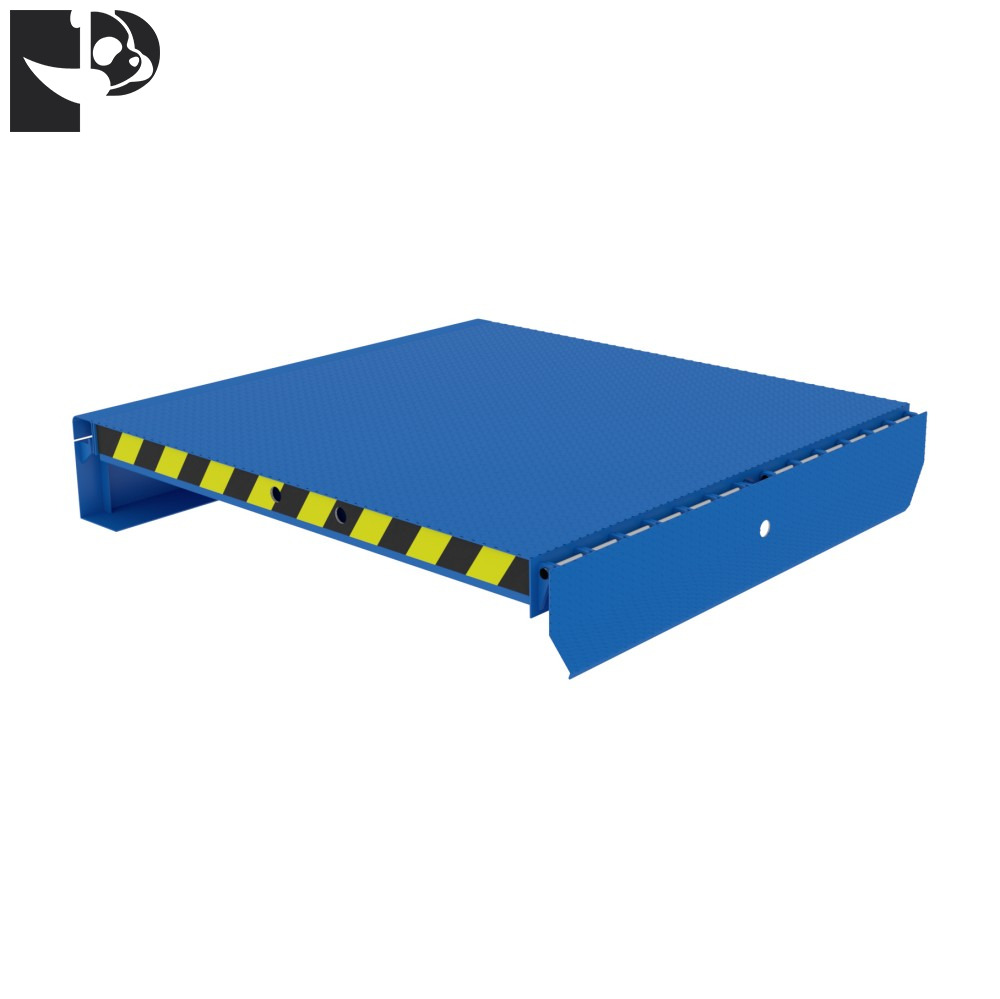
The core formula provides a baseline. Real-world operational variables often require adjusting that baseline upward. Wheel configurations, daily cycle counts, and facility environments drastically alter how structural steel behaves under stress. You must evaluate your specific operational conditions to ensure the equipment survives its intended lifespan.
Forklift wheel configuration significantly affects how loads are distributed across a steel deck. Four-wheel forklifts spread weight relatively evenly, while three-wheel models can concentrate up to 50% of the load on a single rear steering tire, creating severe point loads that may deform deck plates or support beams. Motorized pallet jacks create a similar risk because their small, hard polyurethane wheels transfer impact directly to the deck with little shock absorption. Facilities using three-wheel forklifts or pallet jacks should therefore consider thicker deck plates, tighter beam spacing, and higher structural ratings to reduce long-term wear and damage.
A cycle consists of one pass out into the trailer and one pass back into the facility. Every cycle stresses the hinges, welds, and deck beams. High cycle counts accelerate metal fatigue. This necessitates a capacity upgrade even if the gross weight remains constant. Steel has a finite fatigue life. Bending it slightly thousands of times eventually causes failure. High-volume cross-docking facilities must prioritize structural longevity over baseline weight calculations.
Operational Volume | Cycles Per Bay (Daily) | Capacity Adjustment Recommendation |
|---|---|---|
Light | 1 - 3 Trucks (approx. 50-100 cycles) | Standard calculation (Gross Weight x 2.5) |
Medium | 4 - 8 Trucks (approx. 150-300 cycles) | Increase baseline capacity by 10,000 lbs |
Heavy / Continuous | 8+ Trucks / 24-7 Ops (400+ cycles) | Increase baseline capacity by 20,000+ lbs |
如果是想在现有基础上再稍微简化一点,但保留核心技术信息,可以这样:
Forklift wheel configuration affects how loads are distributed across a steel deck. Four-wheel forklifts spread weight more evenly, while three-wheel models can concentrate up to 50% of the load on one rear tire, creating point loads that may damage deck plates or support beams. Motorized pallet jacks also create high localized stress because their small, hard wheels provide little shock absorption. Facilities using these vehicles should consider thicker deck plates, tighter beam spacing, and higher structural ratings.
Specific industries dictate equipment selection and capacity retention. Cold storage, food and beverage, and chemical handling environments present unique challenges. Extreme temperatures affect hydraulic fluids and mechanical springs differently. In cold storage, steel becomes more brittle, and hydraulic fluids thicken, changing the dynamic response of the equipment during loading.
Wash-down environments introduce moisture and corrosive cleaning chemicals. These elements attack welds and hinge pins. Rust degrades structural integrity rapidly. A deck rated for 40,000 pounds loses that capacity quickly if the support beams corrode. In these environments, you must select equipment with specialized protective coatings or galvanized finishes. Maintaining the structural integrity indirectly protects the capacity rating and ensures long-term safety.
Different drive mechanisms offer varying levels of structural support and longevity. Selecting the right type depends on your calculated capacity, cycle counts, and facility environment. You must match the mechanical drive system to the physical demands of your loading bay.
Mechanical units utilize a spring-biased operation. The operator pulls a chain, releasing tension springs that raise the deck. They manually walk the deck down onto the trailer bed. These units typically serve lower capacity ranges, generally between 25,000 and 40,000 pounds. The hold-down mechanism relies on a ratchet and pawl system to keep the deck secured to the trailer bed during loading.
They fit best in low-volume facilities handling light payloads. Operations utilizing manual or light-duty powered pallet jacks often choose mechanical units. They require a lower initial capital outlay. However, they demand higher long-term maintenance. The mechanical springs suffer from fatigue under heavy dynamic loads. They require frequent adjustment and eventual replacement. They do not suit high-volume or heavy forklift traffic.
Hydraulic units use push-button controls to raise the deck and extend the lip smoothly, with capacities often exceeding 80,000 pounds. The hydraulic cylinders provide continuous deck support, reducing bounce and impact as forklifts cross the threshold. This makes them ideal for heavy manufacturing plants, busy distribution centers, and other high-volume applications. They also adapt easily to different trailer heights and reduce structural stress through smooth hydraulic operation. Although the upfront cost is higher, hydraulic systems offer excellent durability and typically require less routine maintenance than mechanical spring systems.
Air-powered units utilize a pneumatic lifting system. A high-volume, low-pressure air bag inflates to raise the deck. They typically serve the mid-range capacity market, handling 30,000 to 50,000 pounds. The air bag provides a broad area of support underneath the deck plate, which helps distribute the weight evenly during the lifting phase.
These units offer an ergonomic upgrade from mechanical systems without the full complexity of hydraulics. They operate via push-button, eliminating the physical strain of pull-chains. They are environmentally friendly because they use no hydraulic fluid. However, they require a clean operating environment. Debris in the pit can puncture or wear the air bag system over time. They suit medium-volume facilities looking for reliable, mid-capacity performance.
Installing the wrong equipment guarantees operational failure. Understanding the risks of under-sizing and adhering to safety standards protects your personnel and your supply chain. You must look beyond immediate needs and plan for the long-term structural health of your facility.
Hydraulic units use push-button controls to raise the deck and extend the lip smoothly, with capacities often exceeding 80,000 pounds. Continuous hydraulic support reduces bounce and impact as forklifts cross the deck, making these systems ideal for heavy manufacturing plants and high-volume distribution centers. They also adjust easily to different trailer heights and reduce structural stress. Although the initial cost is higher, hydraulic units offer excellent durability and require less routine maintenance than mechanical systems.
Safety compliance is essential when selecting loading dock equipment. The equipment should meet ANSI/MH30.1 performance and testing standards to ensure it can withstand specified dynamic loads and repeated operating cycles. OSHA also requires facilities to maintain safe dock conditions and use equipment suited to actual operational demands. Regular inspections should check welds, deck condition, and smooth operation. Using an undersized or poorly maintained deck can increase accident risks, regulatory penalties, and liability.
Supply chain demands change quickly, so loading dock capacity should account for future growth. Upgrading a pit later can require costly concrete work and facility downtime. If your current requirement is 30,000 pounds, choosing a 40,000-pound unit provides a useful safety and growth buffer. This is especially important as heavier EV forklifts and denser pallet loads become more common. Investing in a higher-capacity Dock Leveler today can reduce the risk of costly equipment replacement as operational demands increase.
Calculate your dynamic multiplier baseline using the exact unladen weight of your heaviest forklift and your maximum payload.
Adjust your capacity requirements upward if your facility uses three-wheel forklifts or motorized pallet jacks with hard polyurethane wheels.
Select the drive mechanism based on your daily cycle counts, prioritizing hydraulic systems for high-volume, heavy-duty applications.
Conduct a comprehensive loading dock site audit to measure exact dock heights and anticipate trailer bed variations before ordering equipment.
Consult with a structural engineer or specialized dock equipment vendor to verify your calculations against ANSI/MH30.1 standards.
A: Static capacity measures the resting weight of a load on a scale. Dynamic capacity accounts for the live forces generated by a moving forklift, including braking, accelerating, and impacting the deck. Equipment must be sized based on dynamic forces, which are significantly higher than static weights.
A: Identify the weight of your heaviest forklift, including attachments. Add the weight of your heaviest single payload. Multiply this combined gross weight by a dynamic impact factor, typically between 2.5 and 3.0, to determine your minimum required capacity rating.
A: Three-wheel forklifts concentrate up to 50% of the total load onto a single rear tire. Motorized pallet jacks use hard polyurethane wheels that do not absorb shock. Both configurations create severe point-loading, requiring thicker deck plates and tighter beam spacing to prevent structural damage.
A: Varying truck heights create steep inclines or declines between the dock floor and the trailer bed. Driving on a steep grade increases the dynamic impact force on the equipment. You must choose a longer deck to reduce the grade or increase the weight capacity to handle the extra force.
A: High-frequency usage increases the number of daily cycles. Every cycle bends and stresses the steel structure. High cycle counts accelerate metal fatigue. Facilities with continuous, 24/7 operations must select higher capacity ratings to combat this fatigue and extend the equipment's lifespan.
A: Under-sized equipment suffers rapid structural failure. The steel deck will dish or bow, the lip will bend, and the welds will crack. This creates a severe safety hazard, risks a complete structural collapse, and causes expensive, unexpected downtime at the loading bay.


