
English
English
Views: 0 Author: Site Editor Publish Time: 2026-06-17 Origin: Site


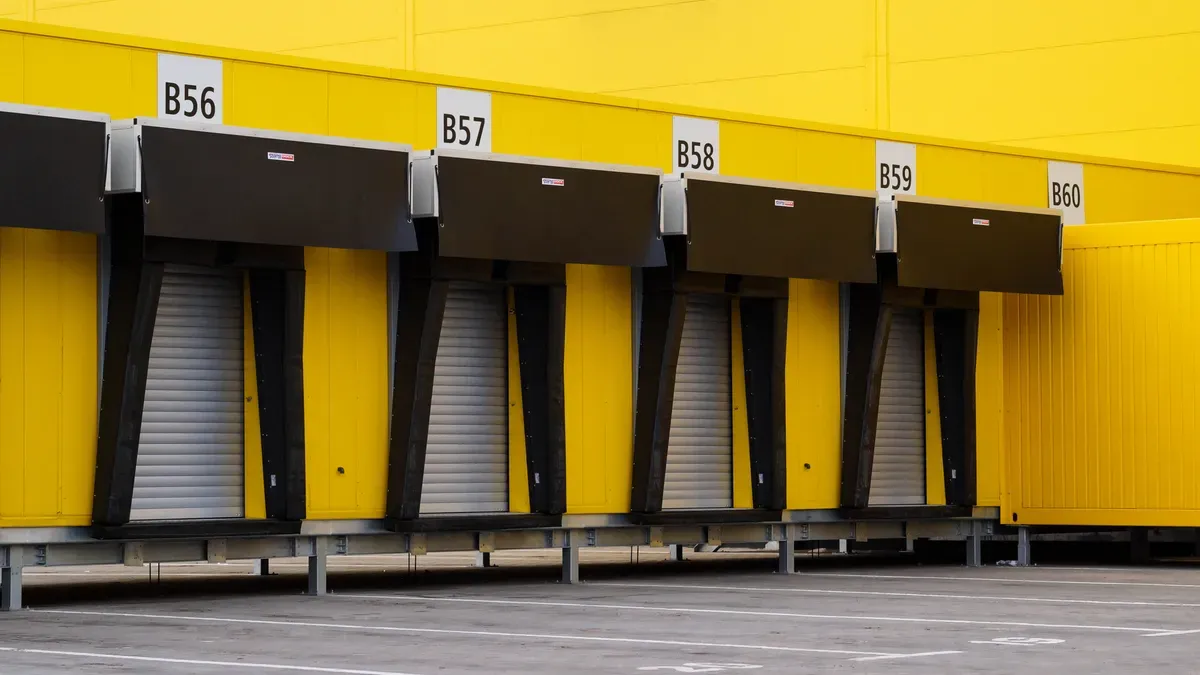
Warehouse loading operations depend on safe and efficient movement between trucks and loading docks. However, differences in trailer heights can create safety risks, slow down loading, and increase the likelihood of cargo damage.
A dock leveler solves these challenges by creating a stable bridge between the warehouse floor and the trailer. Whether used in warehouses, distribution centers, manufacturing plants, or cold storage facilities, dock levelers have become an essential part of modern loading dock systems.
This guide explains what a dock leveler is, why it is important, the different types available, typical applications, and how to choose the right solution for your facility.
• Dock levelers create a safe bridge between warehouse docks and trailers.
• Choosing the right dock leveler improves safety, productivity, and loading efficiency.
• Different dock leveler types are designed for different operational requirements.
• Hydraulic dock levelers are ideal for high-frequency warehouse operations.
• Proper selection and routine maintenance maximize long-term performance.
A dock leveler is a mechanical or hydraulic platform installed at a loading dock to bridge the height difference between a warehouse floor and a truck trailer. It creates a safe and stable transition for forklifts, pallet jacks, and other material handling equipment during loading and unloading operations.
By automatically compensating for different trailer heights, dock levelers improve loading efficiency, reduce manual handling risks, and help protect both personnel and cargo. They are widely used in warehouses, distribution centers, manufacturing plants, cold storage facilities, and logistics hubs where frequent truck loading is required.
Unlike portable dock ramps, dock levelers are permanently installed as part of a complete loading dock system and are designed to support continuous, high-volume operations.
Want to understand the complete working process? Read our Hydraulic Dock Leveler Working Guide.
Warehouse loading operations require fast, safe, and efficient movement of goods between trucks and buildings. Without a dock leveler, height differences between the loading dock and trailer can create safety hazards, slow down operations, and increase the risk of cargo damage.
A properly selected dock leveler provides several important benefits:
Improves workplace safety by creating a stable loading surface.
Increases loading and unloading efficiency for forklifts and pallet trucks.
Protects goods and material handling equipment from impact and uneven transitions.
Reduces labor intensity and minimizes loading delays.
Supports continuous operations in high-volume warehouse environments.
For modern logistics facilities, dock levelers are no longer optional equipment—they are an essential component of a safe and efficient loading dock system.
Modern warehouses process large volumes of inbound and outbound shipments every day. Differences in trailer heights, frequent forklift traffic, and demanding loading schedules require a safe and efficient connection between trucks and warehouse floors.
Dock levelers help warehouses streamline loading operations by creating a stable bridge that adapts to different vehicle heights. This reduces loading delays, improves worker safety, minimizes cargo damage, and supports higher operational efficiency.
For warehouses handling frequent truck movements, dock levelers are no longer optional equipment—they are a fundamental part of an efficient loading dock system.

Different loading environments require different dock leveler designs. Selecting the appropriate type depends on loading frequency, trailer variations, environmental conditions, and operational requirements.
Hydraulic dock levelers provide push-button operation, smooth platform movement, and high load capacity. They are the preferred choice for warehouses, logistics centers, and manufacturing facilities with frequent loading operations.
Best for: High-volume warehouses and distribution centers.
Vertical dock levelers store in an upright position when not in use, allowing overhead doors to close tightly against the floor. They are commonly used in cold storage, food processing, and pharmaceutical facilities where hygiene and temperature control are critical.
Best for: Cold storage and temperature-controlled facilities.
Telescopic dock levelers feature an extendable lip that provides greater flexibility when servicing trucks with varying trailer positions. They improve loading accuracy and are ideal for facilities with mixed vehicle fleets.
Best for: Logistics hubs and distribution centers.
Edge-of-dock levelers mount directly to the dock face without requiring a dock pit. They provide a simple and economical loading solution for facilities with lower loading frequency.
Best for: Small warehouses and retrofit projects.
Here is a table to help you compare edge dock levelers with other types of dock levelers:
Feature | Edge Dock Levelers | Hydraulic Dock Levelers | Telescopic Dock Levelers | Vertical Dock Levelers |
|---|---|---|---|---|
Installation | Fast, no pit required | Requires pit | Requires pit | Requires pit |
Load Capacity | Moderate | High | High | High |
Operation | Manual | Push-button (hydraulic) | Push-button (hydraulic) | Push-button (hydraulic) |
Best For | Small/medium facilities | High-traffic warehouses | Mixed vehicle heights | Cold storage, hygiene |
Cost | Low | Medium to high | High | High |
You see that edge dock levelers fill an important role among the types of dock levelers. You can select them when you need a simple, reliable, and affordable solution. If your operation grows or your needs change, you can always explore other types of dock levelers from Panda Logistics, such as hydraulic, telescopic, or vertical models.
You can contact Panda Logistics for guidance on choosing the right dock leveler for your facility. You will receive expert advice and custom solutions to fit your workflow and safety requirements.
A dock leveler does not work independently. It is one component of a complete loading dock system.
A modern loading dock typically includes:
• Dock Leveler
• Vehicle Restraint
• Dock Shelter
• Industrial Door
• Dock Bumpers
• Dock Lights
These systems work together to improve safety, efficiency, and environmental control.
Dock levelers are widely used across different warehouse environments. Selecting the appropriate dock leveler for each facility type helps improve loading efficiency, workplace safety, and long-term operational performance.
Warehouses handle daily inbound and outbound shipments with trucks of varying heights. A dock leveler provides a stable loading surface, allowing forklifts and pallet trucks to move safely and efficiently throughout loading operations.
Recommended Dock Levelers
Hydraulic Dock Leveler
Telescopic Dock Leveler
Key Benefit
Supports smooth warehouse loading operations while reducing loading delays and improving workplace safety.
Distribution centers process large volumes of goods and require rapid truck turnaround. Dock levelers help maintain continuous loading operations by accommodating different trailer heights and supporting high-frequency forklift traffic.
Recommended Dock Levelers
Hydraulic Dock Leveler
Telescopic Dock Leveler
Key Benefit
Improves loading efficiency, reduces truck waiting time, and increases overall logistics productivity.
Cold storage warehouses require strict temperature control during loading and unloading. Vertical dock levelers allow dock doors to close tightly when not in use, helping reduce energy loss while maintaining product quality.
Recommended Dock Levelers
Vertical Dock Leveler
Hydraulic Dock Leveler
Key Benefit
Maintains thermal efficiency while supporting safe and hygienic loading operations.
Pairing a Vertical Dock Leveler with an Inflatable Dock Shelter helps improve thermal efficiency in cold storage facilities.
Manufacturing facilities require reliable loading equipment to support the continuous movement of raw materials and finished products. Heavy-duty dock levelers provide stable performance under demanding operating conditions.
Recommended Dock Levelers
Heavy-Duty Hydraulic Dock Leveler
Telescopic Dock Leveler
Key Benefit
Supports continuous production while improving loading safety and equipment reliability.
You start by assessing your facility’s requirements before choosing the right dock leveler. You examine the types of trucks that visit your dock, the weight of products you handle, and the frequency of loading operation. You measure dock height and consider the adjustment range needed for different vehicles. You also evaluate the operational environment, such as exposure to harsh weather or temperature-sensitive storage. Safety equipment features, like lip locks and barriers, help prevent accidents. You plan for future growth by selecting dock levelers with higher capacity.
Factor | Description |
|---|---|
Types of Trucks | Trucks vary in bed height and load capacity, affecting leveler selection. |
Weight of Products | Overloading leads to equipment failure; match leveler to maximum load. |
Frequency of Use | Durable levelers withstand constant operation in busy facilities. |
Weight Capacity | Choose levelers that safely handle loads, typically 25,000–80,000 pounds. |
Dock Height and Adjustment | Measure dock and truck bed heights for proper fit. |
Leveler Type | Mechanical, hydraulic, air-powered, and edge-of-dock options offer unique benefits. |
Operational Environment | Specialized levelers suit harsh or temperature-sensitive conditions. |
Safety Features | Lip locks and barriers enhance safety during loading. |
Future-proofing Investment | Higher capacity supports facility growth and changing needs. |
You select dock levelers based on the load capacity required for your operation. You calculate the maximum weight your equipment must support, including forklifts, pallet jacks, and cargo. You avoid overloading by matching the leveler’s capacity to your heaviest shipments. You ensure safe loading and unloading, which protects your equipment and reduces maintenance costs.
You measure dock height and compare it to the range of truck bed heights. You choose dock levelers that adjust smoothly to bridge gaps and create a stable surface. You prevent accidents and improve productivity by ensuring the platform matches every vehicle. You consider installation requirements to fit your facility’s layout.
You evaluate how often loading occurs at your dock. High-frequency operation demands durable dock levelers that withstand constant use. You select models with robust steel construction and advanced hydraulic systems for busy warehouses. You reduce downtime and maintenance costs by investing in reliable equipment.
You consider the operational environment when choosing the right dock leveler. Facilities with temperature-sensitive storage need levelers that maintain energy efficiency and protect inventory. You select specialized models for harsh conditions, such as cold storage or outdoor docks. You improve performance and extend equipment lifespan by matching the leveler to your environment.
Criteria | Details |
|---|---|
Types | Recessed Pit, Edge-of-Dock, Low Dock Leveler |
Specifications | Length, Width, Lip Projection, Load Capacity |
Activation Systems | Mechanical, Hydraulic, Air-Powered |
Benefits | Easier operation, safer with interlock features, lower long-term costs despite higher initial cost |
You compare dock levelers by examining load capacity, durability, and maintenance requirements. Hydraulic dock levelers offer high capacity and durability with low maintenance needs. Mechanical models provide moderate capacity and require frequent servicing. Air-powered dock levelers combine high durability with low maintenance. You review ownership costs over ten years: mechanical models average $3,200, while hydraulic or air bag models cost around $1,000. You schedule regular servicing every 90 days for optimal performance.
Type of Dock Leveler | Load Capacity | Durability | Maintenance Requirements |
|---|---|---|---|
Hydraulic | High | High | Low |
Mechanical | Moderate | Moderate | High |
Air-Powered | Moderate | High | Low |
Tip: You benefit from custom engineering solutions and consultation services from Panda Logistics. Tailored dock levelers accommodate various trailer heights, streamline loading operation, and reduce risks. You enhance safety and productivity while lowering maintenance costs and extending equipment lifespan.
You improve your loading dock operations when you work closely with reliable suppliers. Choosing the right dock leveler starts with clear communication and a strong partnership. Panda Logistics offers expert consultation and custom engineering solutions to help you meet your facility’s unique needs.
You begin by sharing your requirements with your supplier. You describe your dock dimensions, expected load capacities, and the types of vehicles that visit your facility. You also explain your workflow and any special environmental conditions, such as cold storage or outdoor exposure. This information helps your supplier recommend the best dock leveler for your operation.
You benefit from a supplier who provides detailed product specifications and technical support. Panda Logistics guides you through the process of selecting platform size, lip length, and hydraulic system options. You receive advice on safety features, such as emergency stops, safety lips, and warning systems. You also learn about maintenance schedules and training guidelines for your team.
Tip: Always ask your supplier for a site assessment. You gain valuable insights into your dock layout and loading patterns. This step ensures you choose a dock leveler that fits your space and supports your workflow.
You review product samples and technical drawings before making a decision. Panda Logistics offers custom engineering, so you can request modifications to match your facility’s requirements. You specify platform dimensions, load capacities, and activation systems. You also select accessories, such as dock seals, shelters, and vehicle restraints, to create a fully integrated loading dock solution.
You compare quotes and evaluate warranty terms. Panda Logistics provides transparent pricing and strong after-sales support. You receive installation guidance and ongoing maintenance advice. You also access troubleshooting resources and spare parts when needed.
Here is a checklist to help you work effectively with your supplier:
Share your facility’s requirements and loading patterns
Request a site assessment and technical consultation
Review product specifications and custom options
Specify platform size, load capacity, and hydraulic system
Select safety features and accessories
Compare quotes and warranty terms
Plan for installation and maintenance support
Step | What You Gain |
|---|---|
Site Assessment | Accurate fit and workflow optimization |
Custom Engineering | Tailored solutions for unique requirements |
Technical Support | Expert advice and troubleshooting |
After-Sales Service | Reliable maintenance and spare parts supply |
You build a safer and more efficient loading dock when you partner with a trusted supplier. Panda Logistics supports you from consultation to installation and beyond. You ensure your dock leveler matches your needs and delivers long-term value.
Choose a dock leveler that not only meets current loading requirements but also supports future increases in truck traffic, heavier loads, and warehouse expansion.
Selecting the right dock leveler is an important investment for warehouse safety and operational efficiency. However, many facilities focus only on the initial purchase price and overlook factors that affect long-term performance, maintenance costs, and productivity. Avoiding the following common mistakes can help ensure a more reliable and cost-effective loading dock solution.
A lower purchase price may seem attractive, but it often results in higher maintenance costs, shorter service life, and lower operational efficiency. Instead of focusing solely on upfront cost, evaluate the dock leveler's durability, safety features, expected lifespan, and total cost of ownership.
Selecting a dock leveler with insufficient load capacity can create serious safety risks and reduce equipment lifespan. Always consider the combined weight of forklifts, cargo, and handling equipment, and choose a dock leveler that provides an appropriate safety margin for daily operations.
Warehouses often receive trucks with different trailer heights. Choosing a dock leveler without considering these height differences may result in poor platform alignment, unstable loading conditions, and slower operations. Facilities handling mixed vehicle fleets should consider hydraulic or telescopic dock levelers for greater flexibility.
Operating environments play an important role in dock leveler selection. Cold storage facilities, food processing plants, and outdoor loading docks may require specialized equipment with enhanced sealing, corrosion resistance, or temperature-resistant components to ensure reliable long-term performance.
Maintenance should be considered before purchasing a dock leveler, not after installation. Equipment designed for easy inspection, routine servicing, and readily available replacement parts can significantly reduce downtime and maintenance costs throughout its service life.
Choosing the right dock leveler is not only about bridging the gap between the dock and trailer. It directly affects loading efficiency, workplace safety, equipment protection, and long-term operating costs.
Whether you operate a warehouse, distribution center, manufacturing plant, or cold storage facility, selecting the appropriate dock leveler helps improve productivity and supports reliable loading operations.
Explore our dock leveler solutions or contact our engineering team for professional recommendations based on your loading dock requirements.
A dock leveler is permanently installed at a loading dock and is designed for frequent warehouse loading operations. It automatically or mechanically bridges the gap between the warehouse floor and truck trailers. A dock ramp is typically portable and used for temporary loading situations where a permanent dock is unavailable.
For warehouses, distribution centers, and manufacturing facilities with regular truck traffic, dock levelers are generally the preferred solution because they provide greater stability, higher load capacity, and improved operational efficiency.
Hydraulic dock levelers are the most popular choice for modern warehouse loading because they provide smooth push-button operation, high load capacity, and reliable performance during frequent loading and unloading cycles.
For specialized environments such as cold storage facilities, vertical dock levelers are often preferred because they improve environmental sealing and help maintain temperature control. The best solution depends on loading frequency, trailer types, operating conditions, and facility requirements.
You use a dock leveler to bridge the gap between your loading dock and a truck bed. This equipment creates a safe, smooth path for moving goods with forklifts or pallet jacks.
You start by considering your dock height, load capacity, and the types of vehicles you handle. Panda Logistics offers custom engineering to match your specific requirements.
You should inspect your dock leveler at least once a month. Regular checks help you spot wear, leaks, or damage early. This habit keeps your equipment safe and reliable.
You should look for safety lips, emergency stops, warning lights, and vehicle restraints. These features protect your team and prevent accidents during loading and unloading.
Yes, you can. Vertical dock levelers from Panda Logistics help you maintain temperature control and hygiene. They allow you to close dock doors tightly, which saves energy.
Clean the platform and pit regularly.
Lubricate moving parts.
Check for leaks or worn components.
Test all safety features.
Tip: Schedule professional servicing at least once a year.
Yes, Panda Logistics offers installation guidance, technical support, and after-sales service. You receive help from consultation to maintenance, ensuring your dock leveler works efficiently.


